The experience is everything. You must constantly strive to create the culture and ensure success. It's no longer enough to have the right products in the right place at the right time at the right price. You must pay special attention to the lighting, the music, and music. You must host events, offer refreshments, and meet your clients in their own environment. You must do what it takes to go above and beyond. The products/services may get the clients in the door, but your service and their experience are what keep them coming back. You don't want to push too hard or you'll push them away, but you do want to control and maximize the experience. There is a formula to "clienteling" and this is just the beginning.
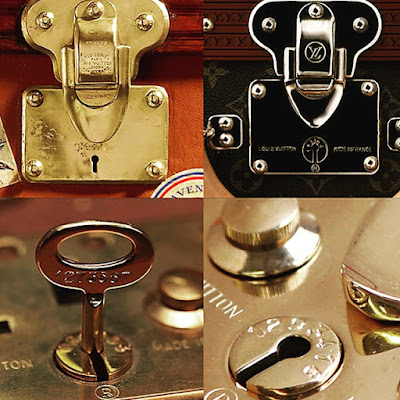
In the 1800s, shortly after his parents died, a teen-aged Louis Vuitton walked nearly 300 miles to Paris. The long journey took over two years. When he arrived, Paris was bustling with the industrial revolution, and he quickly became an apprentice with an established box-maker. Back in the day, box making was a very lucrative business - each box was handcrafted, and the better box-makers even packed the items for transport themselves, ensuring a secure and perfect fit. After 17 years, Monsieur Vuitton started his own business, specializing in customized boxes and trunks. The competition primarily had round tops; Louis's versions were mostly square or rectangular in shape, allowing multiples to be stacked for more efficient transportation. Because of his quality and innovation, he became an official supplier to the fabulous and famous Empress Eugénie, wife of Napoleon III. It was this relationship with Empress Eugénie that opened the door for Louis Vuitton to the luxury demographic - securing future business and the future of his company.
You never know who you're going to meet, what opportunity may present itself, or who is watching.
You don't just "network" at work or for work. You're constantly
meeting new people, representing yourself, your interests and industry,
and profession. You're assessing what others are doing, actively
engaging to discover why they're doing what they're doing, and amassing
best practices as often as possible. You capitalize opportunities to
maximize business, knowledge, and growth, whilst minimizing
expenditures. You might not always be armed with business cards, but a
firm handshake, a smile, and the courage to say hello.
After all, the
answer is "no" until you ask...
This is the art of clienteling. Let's stay in touch.
Showing posts with label clientele relationship management. Show all posts
Thursday, July 7, 2016
Wednesday, April 27, 2016
sample the goods, sample the service
I've worked in luxury retail for nearly 18 years now. A friend was asking me if I thought I'd only ever work in luxury. And my first response was plain and simple: anything can be luxury. So my short answer: yes.
Consider this: with the right attitude, approach, and communication, every job can be luxurious.
The attitude: you must always convey a "can-do" tone with your clients. The more service you deliver, the more time and resources you invest, the relationship becomes more meaningful and more valuable. Asking open ended questions will determine not only the immediate needs of your clients, but help you learn valuable details about their life and long term goals. In luxury retail especially, personal details and knowledge is more than power. They lead to money in the bank.
Your approach must be consistent. You must warmly welcome your clients, quickly determine their needs and wants, and start achieving those goals. Customers don't buy shovels because they want a shovel; customers buy shovels because they need to get digging. The quicker you respond, the more time you save the clients, and thus, the most loyalty you establish. Time is everything, no matter what demographic you may be categorized.
Communication is everything. What does your uniform or clothing say about your personality and salesmanship? Are you trendy, polished, and professional? Or did you just roll out of bed and last launder your wardrobe when Tony Blair was at the helm of the kingdom? Speak confidently and competently; know as much as possible about the goods and services on offer, what you can do for your clients, and how to achieve their goals quickly and discretely. When you act with purpose, you'll be viewed more seriously and more favorably. Ultimately, you should be committed to driving the business and mastering your craft. And when you do, you'll exceed your own goals and do so with an added dash of style + class.
In doing so, you'll want to offer your clients either a sample of the goods or services you wish to sell. Recently I was visiting my favorite Nordstrom store in Nashville with a friend. While we were browsing the cosmetics and skincare department, an associate quickly and casually greeted us, offered herself for assistance if needed, and told us she'd check back with us. She was unobtrusive and quite lovely. A few moments later, upon reapproach, the conversation turned to new products on offer. Candy, the associate, asked if we had ever heard of the brand Diptyque. I had indicated that I had a favorite candle, but that's all I really knew of the brand. Her simple question turned into the biggest smile. Apparently the brand wanted to remove their skincare range from the store, but Candy was so excited and had built a loyal customer base for the products, that they were able to keep the extended range. And since I had never tried the skincare before, she wanted to offer me a few samples. After a moment away, I was presented with the loveliest little bag of a handful of samples, her business card, and the invitation to follow up and share my thoughts on the products.
I'm so impressed. Not only was Candy excited about her products, but she knew exactly how to introduce the brand. And with her fabulous presentation, she not only signaled to me that the products were really wonderful, but she signaled to me that she had established a great relationship with the brand's executives, she was willing to go above and beyond for her customers, and the service she could provide me would be top notch as well.
Candy could have very easily pointed to a few "tester" products on the shelf and told us to take a look. But instead, by offering a few samples in a small bag with her business card, and asking the right amount of questions, she created a solid relationship.
We can all take a few tips from Candy. If you work at a supermarket, offer to push the groceries out to your client's car. It'll give you a moment to grab some fresh air, a little added exercise, and you will be able to push the empty cart back in and prevent unwanted dings and dents in the parking lot. Or if you work at a clothing store, make sure to nicely fold the purchases before placing them in the bag. Wrap them with tissue paper if available. And walk around the cash register to present the purchases to your clients and thank them for their business. Or if you're a travel agent, be sure to follow up with your clients after their return. Not only will your interest in their happiness solidify business in the future, but you may also learn additional tips or updated information from your clients to pass along to others.
No matter what you're selling, offer a sample as much as possible. You never know what big successes may stem from such a small gesture.
Consider this: with the right attitude, approach, and communication, every job can be luxurious.
The attitude: you must always convey a "can-do" tone with your clients. The more service you deliver, the more time and resources you invest, the relationship becomes more meaningful and more valuable. Asking open ended questions will determine not only the immediate needs of your clients, but help you learn valuable details about their life and long term goals. In luxury retail especially, personal details and knowledge is more than power. They lead to money in the bank.
Your approach must be consistent. You must warmly welcome your clients, quickly determine their needs and wants, and start achieving those goals. Customers don't buy shovels because they want a shovel; customers buy shovels because they need to get digging. The quicker you respond, the more time you save the clients, and thus, the most loyalty you establish. Time is everything, no matter what demographic you may be categorized.
Communication is everything. What does your uniform or clothing say about your personality and salesmanship? Are you trendy, polished, and professional? Or did you just roll out of bed and last launder your wardrobe when Tony Blair was at the helm of the kingdom? Speak confidently and competently; know as much as possible about the goods and services on offer, what you can do for your clients, and how to achieve their goals quickly and discretely. When you act with purpose, you'll be viewed more seriously and more favorably. Ultimately, you should be committed to driving the business and mastering your craft. And when you do, you'll exceed your own goals and do so with an added dash of style + class.
In doing so, you'll want to offer your clients either a sample of the goods or services you wish to sell. Recently I was visiting my favorite Nordstrom store in Nashville with a friend. While we were browsing the cosmetics and skincare department, an associate quickly and casually greeted us, offered herself for assistance if needed, and told us she'd check back with us. She was unobtrusive and quite lovely. A few moments later, upon reapproach, the conversation turned to new products on offer. Candy, the associate, asked if we had ever heard of the brand Diptyque. I had indicated that I had a favorite candle, but that's all I really knew of the brand. Her simple question turned into the biggest smile. Apparently the brand wanted to remove their skincare range from the store, but Candy was so excited and had built a loyal customer base for the products, that they were able to keep the extended range. And since I had never tried the skincare before, she wanted to offer me a few samples. After a moment away, I was presented with the loveliest little bag of a handful of samples, her business card, and the invitation to follow up and share my thoughts on the products.
I'm so impressed. Not only was Candy excited about her products, but she knew exactly how to introduce the brand. And with her fabulous presentation, she not only signaled to me that the products were really wonderful, but she signaled to me that she had established a great relationship with the brand's executives, she was willing to go above and beyond for her customers, and the service she could provide me would be top notch as well.
Candy could have very easily pointed to a few "tester" products on the shelf and told us to take a look. But instead, by offering a few samples in a small bag with her business card, and asking the right amount of questions, she created a solid relationship.
We can all take a few tips from Candy. If you work at a supermarket, offer to push the groceries out to your client's car. It'll give you a moment to grab some fresh air, a little added exercise, and you will be able to push the empty cart back in and prevent unwanted dings and dents in the parking lot. Or if you work at a clothing store, make sure to nicely fold the purchases before placing them in the bag. Wrap them with tissue paper if available. And walk around the cash register to present the purchases to your clients and thank them for their business. Or if you're a travel agent, be sure to follow up with your clients after their return. Not only will your interest in their happiness solidify business in the future, but you may also learn additional tips or updated information from your clients to pass along to others.
No matter what you're selling, offer a sample as much as possible. You never know what big successes may stem from such a small gesture.
Tuesday, April 19, 2016
more than just numbers
Is it just me, or does it seem like more and more companies are merging into conglomerates and mega-companies? Over the last few years we've seen many airlines merging into super-lines, expanding their routes and minimizing their reach. We've seen car companies gobbling up each other like a buffet, mixing the expected with the unexpected. If you told me 15 years ago that Jeep, Fiat, Chrysler, and Maserati would all be owned by the same Group, I would have laughed in your face. Canada's Hudson Bay Company boasts a myriad of retail brands throughout Canada, Belgium, Germany, and the United States, including Galeria Kaufhof, Gilt.com, Hudson's Bay, Home Outfitters, Lord & Taylor, Saks Fifth Avenue, and the Saks outlet version OFF 5th. I'm all for increasing efficiency, implementing best practices, and improving the final product for customers. However, sometimes these mergers aren't as seamless or positive as one would have hoped - often resulting in decreased customer service, layoffs, and lost brand identity.
I read an article recently that said Nordstrom had reported an increased inventory of 12% in the last quarter, and this must mean their having a hard time selling their merchandise. I understand that inventory levels can shed some insight into a brand's business strength and sales figures. But as both a businessman and a customer, I know this only shows a portion of the picture. Have they considered that Nordstrom is constantly evolving with their customers - often featuring new brands and designers, new product categories, and new services? Offering newness takes both time to implement and time to test. Every time I visit my local Nordstrom, there's a line at their coffee bar, the restaurant is packed, and there are plenty of customers - not just looking, but actually buying. It makes me wonder, are those business analysts comparing traditional departments from year-to-year, or are they including the overall inventory?
Buying a Fiat is a completely different experience than buying a Maserati. Buying a wardrobe at gilt.com is a totally different experience than buying a wardrobe at Saks Fifth Avenue. The end result may be basically be the same, but the approach, the expectation, and the experience couldn't be farther apart. Regardless of what products and services are sold, when brands commit themselves to establishing the most incredible experience for their customers, prioritize product knowledge, and implementing a "can-do" attitude to help their customers identify and reach their own goals, every business wins.
Retail = Relationships. Relationships between employees and customers drive the business. Relationships between business partners and shareholders shape the direction of the brand. Relationships between the buyers and designers influence product availability. Relationships between managers and employees effect the atmosphere and culture of each location. And relationships between influential clients and their friends can impact general consumer sentiment toward the brand in general. Better brands prioritize these relationships and spend massive amounts of time and resources both establishing and maintaining positive relationships. And rightfully so.
Yes, companies should focus on the bottom line. But they can't lose sight of the two most important aspects: their customers and their employees. When you establish a corporate culture that includes clear expectations, constant support to not only perform those job expectations, but to succeed and surpass goals, and an environment that adds value to your employees' lives, this will only intensify and increase levels of customer satisfaction. Happy Employees = Happy Customers.
Across every culture and country, there is only one resource that is traded equally: time. When you do something that saves time, there is added value to that task. When you spend time with someone, there is more meaning, more passion, and more value to that moment. When someone gives their time to your cause, you're more thankful, more loyal in the future, and more committed to their relationship and cause. Time is everything. And the same is for the retail industry. When an employee takes time to walk you to a specific department, rather than just point or give you instructions, the customer feels more value and loyalty to the brand. When a manager takes time to train an employee on a new task or improved function, the employee retains the knowledge, feels increased care from their superiors, and an increased priority for teamwork and education. The feeling is contagious.
When has an employee gone above and beyond for you? How did it make you feel? When have you spent extra time with a customer or client? Was there a positive return on investment?
I read an article recently that said Nordstrom had reported an increased inventory of 12% in the last quarter, and this must mean their having a hard time selling their merchandise. I understand that inventory levels can shed some insight into a brand's business strength and sales figures. But as both a businessman and a customer, I know this only shows a portion of the picture. Have they considered that Nordstrom is constantly evolving with their customers - often featuring new brands and designers, new product categories, and new services? Offering newness takes both time to implement and time to test. Every time I visit my local Nordstrom, there's a line at their coffee bar, the restaurant is packed, and there are plenty of customers - not just looking, but actually buying. It makes me wonder, are those business analysts comparing traditional departments from year-to-year, or are they including the overall inventory?
Buying a Fiat is a completely different experience than buying a Maserati. Buying a wardrobe at gilt.com is a totally different experience than buying a wardrobe at Saks Fifth Avenue. The end result may be basically be the same, but the approach, the expectation, and the experience couldn't be farther apart. Regardless of what products and services are sold, when brands commit themselves to establishing the most incredible experience for their customers, prioritize product knowledge, and implementing a "can-do" attitude to help their customers identify and reach their own goals, every business wins.
Retail = Relationships. Relationships between employees and customers drive the business. Relationships between business partners and shareholders shape the direction of the brand. Relationships between the buyers and designers influence product availability. Relationships between managers and employees effect the atmosphere and culture of each location. And relationships between influential clients and their friends can impact general consumer sentiment toward the brand in general. Better brands prioritize these relationships and spend massive amounts of time and resources both establishing and maintaining positive relationships. And rightfully so.
Yes, companies should focus on the bottom line. But they can't lose sight of the two most important aspects: their customers and their employees. When you establish a corporate culture that includes clear expectations, constant support to not only perform those job expectations, but to succeed and surpass goals, and an environment that adds value to your employees' lives, this will only intensify and increase levels of customer satisfaction. Happy Employees = Happy Customers.
Across every culture and country, there is only one resource that is traded equally: time. When you do something that saves time, there is added value to that task. When you spend time with someone, there is more meaning, more passion, and more value to that moment. When someone gives their time to your cause, you're more thankful, more loyal in the future, and more committed to their relationship and cause. Time is everything. And the same is for the retail industry. When an employee takes time to walk you to a specific department, rather than just point or give you instructions, the customer feels more value and loyalty to the brand. When a manager takes time to train an employee on a new task or improved function, the employee retains the knowledge, feels increased care from their superiors, and an increased priority for teamwork and education. The feeling is contagious.
When has an employee gone above and beyond for you? How did it make you feel? When have you spent extra time with a customer or client? Was there a positive return on investment?
Wednesday, March 16, 2016
arm yourself with awareness
Over the last few weeks, I've been approached by three different retail situations. I'd like to discuss them all.
First, I was with a friend a few weeks ago at a department store in Florida. I wanted to show her my favorite coffee counter and pick up a few goodies. While we were there, we decided to the home goods and furniture, as she was in the market for a new bed. As luck would be in our favor, there was a collection of brand new mattresses and box springs that were drastically reduced due to a sourcing issue with the manufacturer. So of course, we had to test out the beds and ultimately bought one. In the process, the very kind and knowledgeable salesman shared with us a very interesting comment. He said that business had usually been pretty slow in his department, and there are even employees who work in the store on other floors who didn't even know they sold furniture, let alone beds and mattresses.
Secondly, I was at a more luxurious department store also in Florida, but another city. I absolutely love skincare and fragrances, so I'm always excited and interested to scope out these departments in various cities. I like to see what's new, how the stores promote the brands and category, and see what best practices the salespeople implement. While visiting one of my favorite brands, I recognized the associate. I had known her through retail for at least a decade, so we had some established rapport. I was genuinely shopping for myself, but also listening to her interaction with a customer. After the customer left, she approached me and we began talking about the brand, new products, business, and the like. She asked my opinion about a new product, and we began sharing tips and tricks of the beauty industry. She also felt comfortable enough to share with me that she was beyond hungry for product knowledge and training, but that her Account Executive was virtually nonexistent.
Thirdly, while I was shopping at my favorite mall, I stopped in an Italian designer's boutique to take a look around. I was quickly and warmly greeted by a sales associate, offered a beverage, and encouraged to look around. So far so good, and impressive, to be honest. After a few minutes, we started talking about business and insights. The gentleman shared with me how business was a little tricky, especially since most of their target demographic "only comes to the big department store" and doesn't come out into the mall.
All three of these problems can be solved with increased and refocused awareness.
In any sales position, it doesn't matter what product or service you're selling. What does matter are the relationships that you establish and maintain, the manner you sell those products and services, and how you represent yourself and the company. If you were building a house, you'd need to know what tools are in the toolbox before you begin construction. This same principle works for retail - know what goods and services are on offer, know what decisions you can or cannot make, and understand your job description.
For the mattress example above, it would be so simple to build into your team's schedule a daily, weekly, or even biweekly "walk about" throughout your store. Encourage your associates to walk around other departments, see what products are new or on special feature, and remind themselves what it's like to view the store as a client. Then, when you overhear a client talking about a specific need or product they may be seeking, employees can quickly and accurately provide suggestions or guidance. One-stop-shopping and maximized sales at it's finest.
For the beauty counter example, I partly blame the Account Executive. All too often, companies are so focused on maximizing profitability and minimizing expenses that they disconnect the human aspect of business and distance themselves from success. If this employee's AE had visited in person even one time, it would have been obvious that they were in need of additional training and resources and had the aptitude to take the information and run towards success. Merely analyzing numbers virtually only tells a part of the retail reality. Furthermore, employees can always take the initiative on their own time and think creatively. With some much information easily accessible online, just an hour or two per week at the company's website would offer so much product knowledge, company history and heritage, and insight into inspiration and creative development.
For the luxury Italian brand, there are always ways to increase traffic to your store. A hypothetical scenario: if I worked in a Goyard boutique on Mount Street, and there was also a small Goyard section inside Harrod's on Brompton Street, I would go out of my way to make a relationship with the people in Harrod's. As an employee of the brand in the boutique, you always want people to go to the boutique first. So to be more attractive, I'd introduce myself to the employees at the counter and the management of the store. Chances are, the boutique employees get more training, more insight, and more attention than employees of leased spaces inside department stores. When you approach the relationship with honesty and a team spirit, the customer gets more support and the brand sees even more success. If the department store's buyers bought a shirt in two colors, but the client mentions they want it in an alternate color, how will the department store employees know whether or not the shirt was available in other colors? If they had a relationship with the actual boutique, this information may be easily shared. Or, if the department store employee had a relationship with their store's managers or buyers, they could easily see if the requested product was available to their inventory. Also, if I was working at the smaller boutique, I'd go out of my way to introduce myself to all the concierges at the luxury hotels, local magazine editors, and other luxury industry insiders. The more networking and brand awareness, the better. And in luxury, a personal connection is exactly the invitation needed to realize even more opportunity and success.
Long story short: arm yourself with awareness. Shopping should be simple: customers should find the right products in the right places at the right times with the right signs and at the right prices. Plain and simple. Right?
First, I was with a friend a few weeks ago at a department store in Florida. I wanted to show her my favorite coffee counter and pick up a few goodies. While we were there, we decided to the home goods and furniture, as she was in the market for a new bed. As luck would be in our favor, there was a collection of brand new mattresses and box springs that were drastically reduced due to a sourcing issue with the manufacturer. So of course, we had to test out the beds and ultimately bought one. In the process, the very kind and knowledgeable salesman shared with us a very interesting comment. He said that business had usually been pretty slow in his department, and there are even employees who work in the store on other floors who didn't even know they sold furniture, let alone beds and mattresses.
Secondly, I was at a more luxurious department store also in Florida, but another city. I absolutely love skincare and fragrances, so I'm always excited and interested to scope out these departments in various cities. I like to see what's new, how the stores promote the brands and category, and see what best practices the salespeople implement. While visiting one of my favorite brands, I recognized the associate. I had known her through retail for at least a decade, so we had some established rapport. I was genuinely shopping for myself, but also listening to her interaction with a customer. After the customer left, she approached me and we began talking about the brand, new products, business, and the like. She asked my opinion about a new product, and we began sharing tips and tricks of the beauty industry. She also felt comfortable enough to share with me that she was beyond hungry for product knowledge and training, but that her Account Executive was virtually nonexistent.
Thirdly, while I was shopping at my favorite mall, I stopped in an Italian designer's boutique to take a look around. I was quickly and warmly greeted by a sales associate, offered a beverage, and encouraged to look around. So far so good, and impressive, to be honest. After a few minutes, we started talking about business and insights. The gentleman shared with me how business was a little tricky, especially since most of their target demographic "only comes to the big department store" and doesn't come out into the mall.
All three of these problems can be solved with increased and refocused awareness.
In any sales position, it doesn't matter what product or service you're selling. What does matter are the relationships that you establish and maintain, the manner you sell those products and services, and how you represent yourself and the company. If you were building a house, you'd need to know what tools are in the toolbox before you begin construction. This same principle works for retail - know what goods and services are on offer, know what decisions you can or cannot make, and understand your job description.
For the mattress example above, it would be so simple to build into your team's schedule a daily, weekly, or even biweekly "walk about" throughout your store. Encourage your associates to walk around other departments, see what products are new or on special feature, and remind themselves what it's like to view the store as a client. Then, when you overhear a client talking about a specific need or product they may be seeking, employees can quickly and accurately provide suggestions or guidance. One-stop-shopping and maximized sales at it's finest.
For the beauty counter example, I partly blame the Account Executive. All too often, companies are so focused on maximizing profitability and minimizing expenses that they disconnect the human aspect of business and distance themselves from success. If this employee's AE had visited in person even one time, it would have been obvious that they were in need of additional training and resources and had the aptitude to take the information and run towards success. Merely analyzing numbers virtually only tells a part of the retail reality. Furthermore, employees can always take the initiative on their own time and think creatively. With some much information easily accessible online, just an hour or two per week at the company's website would offer so much product knowledge, company history and heritage, and insight into inspiration and creative development.
For the luxury Italian brand, there are always ways to increase traffic to your store. A hypothetical scenario: if I worked in a Goyard boutique on Mount Street, and there was also a small Goyard section inside Harrod's on Brompton Street, I would go out of my way to make a relationship with the people in Harrod's. As an employee of the brand in the boutique, you always want people to go to the boutique first. So to be more attractive, I'd introduce myself to the employees at the counter and the management of the store. Chances are, the boutique employees get more training, more insight, and more attention than employees of leased spaces inside department stores. When you approach the relationship with honesty and a team spirit, the customer gets more support and the brand sees even more success. If the department store's buyers bought a shirt in two colors, but the client mentions they want it in an alternate color, how will the department store employees know whether or not the shirt was available in other colors? If they had a relationship with the actual boutique, this information may be easily shared. Or, if the department store employee had a relationship with their store's managers or buyers, they could easily see if the requested product was available to their inventory. Also, if I was working at the smaller boutique, I'd go out of my way to introduce myself to all the concierges at the luxury hotels, local magazine editors, and other luxury industry insiders. The more networking and brand awareness, the better. And in luxury, a personal connection is exactly the invitation needed to realize even more opportunity and success.
Long story short: arm yourself with awareness. Shopping should be simple: customers should find the right products in the right places at the right times with the right signs and at the right prices. Plain and simple. Right?
Subscribe to:
Posts (Atom)